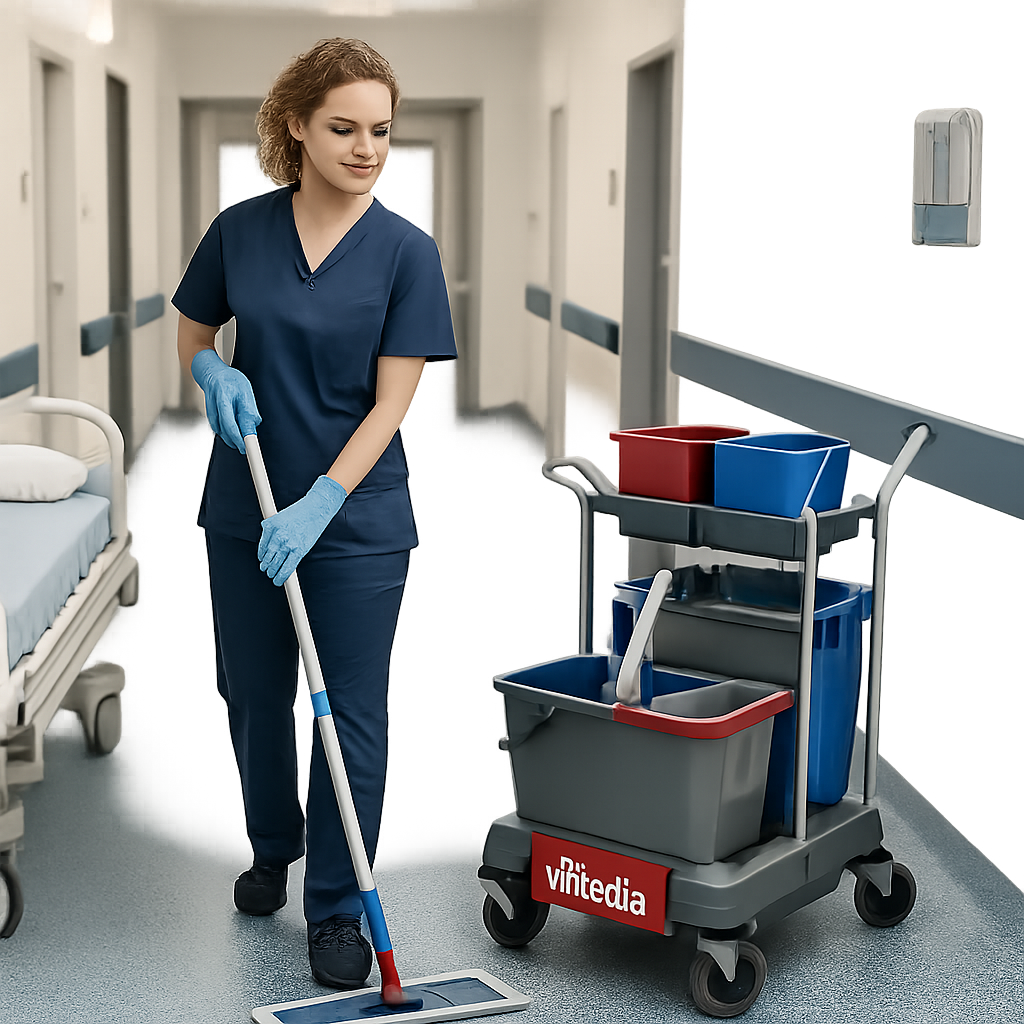
Helping a World-Class Facility Services Company Raise Cleaning Efficiency by 25%
When margins are tight and expectations are high, efficiency becomes a strategic advantage. This case study explains how a global facility services company partnered with an innovation-led supplier to raise cleaning efficiency by 25% across multiple building types—without compromising hygiene or staff wellbeing.
Context and objectives
The client manages multi-site portfolios across healthcare, hospitality, education and commercial real estate. Their objectives were clear: reduce time per task, stabilize quality across regions, and improve ergonomics to retain staff. The program needed to be implementable at scale, with simple training and measurable KPIs.
Interventions
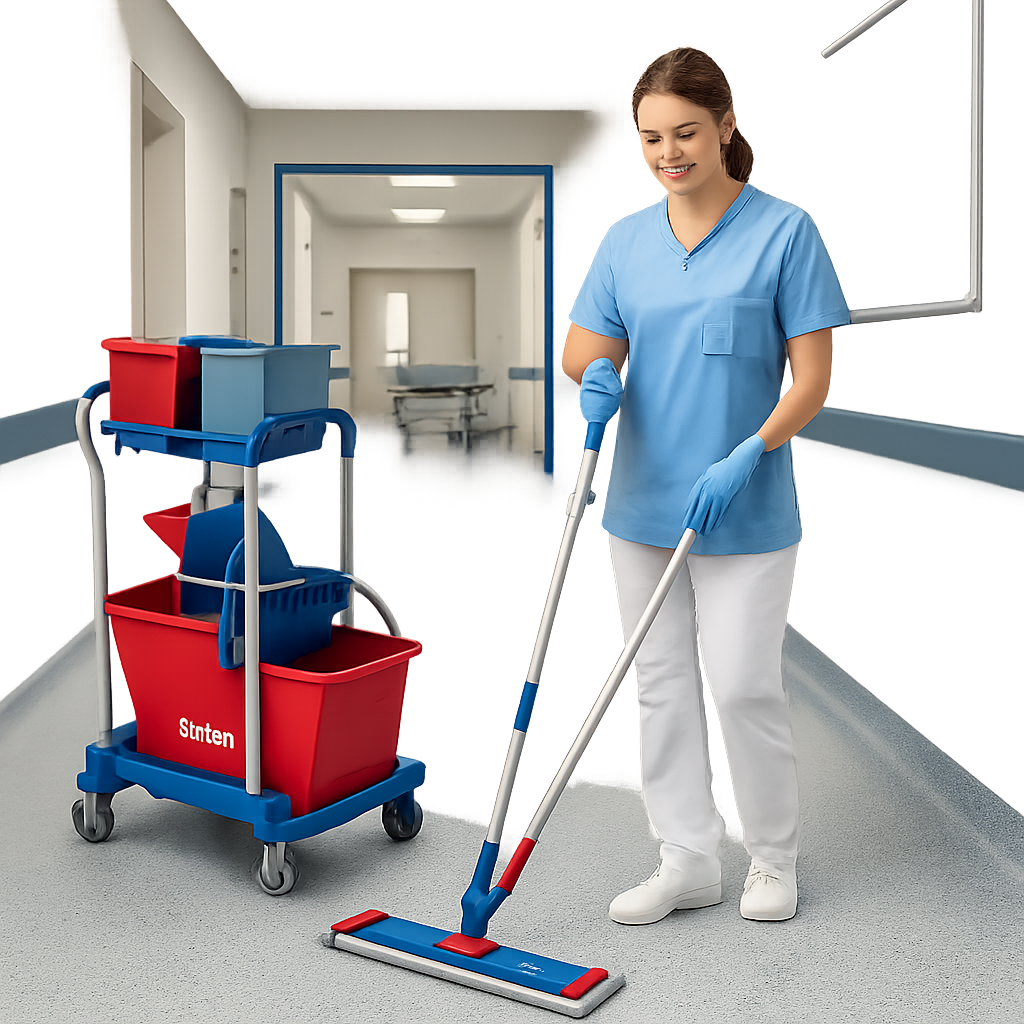
- Microfiber modernization: Replaced cotton textiles with high-performance microfiber cloths and flat mops paired to specific surfaces.
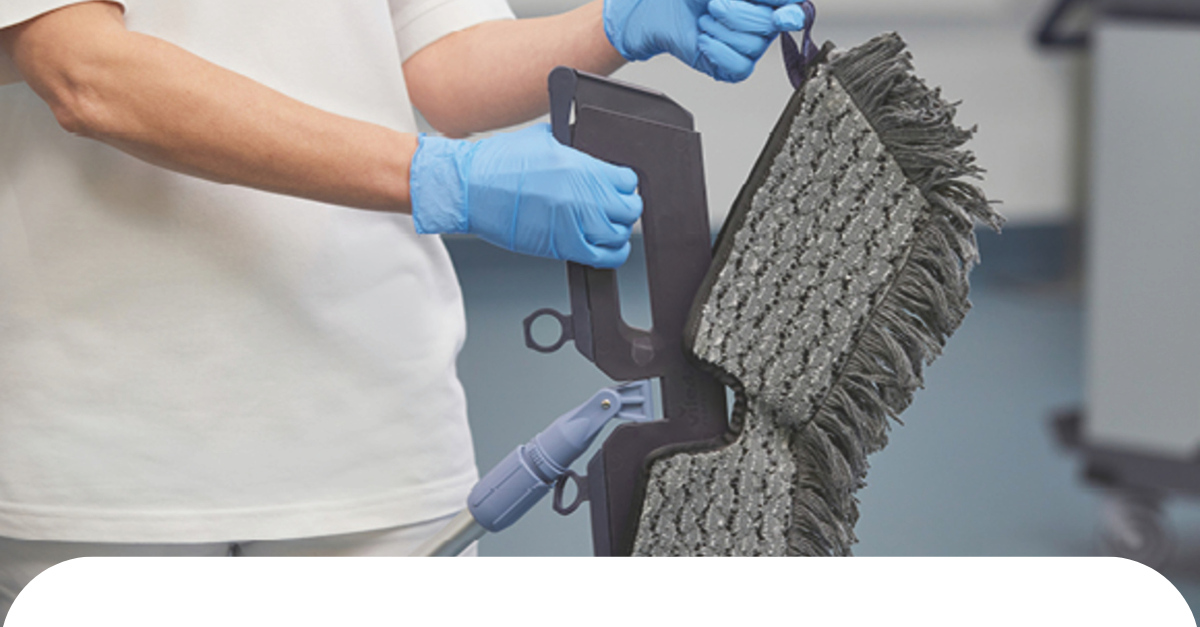
- Pre-prepared methods: Introduced dosage-controlled, ready-to-use mop heads and cloths to eliminate bucket handling.
- Ergonomic equipment: Adjustable poles, lightweight frames and swivel heads reduced strain and improved access.
- Standardized SOPs: Visual, sequence-based procedures with color-coding and auditing checklists.
- Training & certification: Hands-on sessions followed by technique sign-offs and monthly refreshers.
- Measurement: Time-and-motion studies, zone-level productivity metrics, and quality audits.
Results
Across pilot sites, productivity increased quickly as bucket trips disappeared and fewer passes were needed for visible cleanliness. Time per restroom declined by double digits, floor appearance improved, and incident reports related to slips fell as over-wetting was eliminated. Staff feedback highlighted less shoulder and back fatigue and pride in delivering higher standards. After scale-up, the company recorded an average 25% improvement in cleaning efficiency, verified by supervisors and client audits.
Lessons learned
Three factors made the difference: standardized methods, ergonomic tools, and relentless measurement. None alone would have delivered the full impact. Together, they created a virtuous cycle: faster processes led to better morale; better morale drove consistency; consistency produced data that justified further investment.
Conclusion: Efficiency is not about rushing—it is about removing friction. With the right systems, 25% is not an outlier; it is a repeatable outcome.



 Linkedin
 X
X
 Facebook

 Blog
Blog