

Cleaning KPIs That Drive Performance
Great cleaning programs run on evidence, not anecdotes. Defining and tracking the right key performance indicators (KPIs) turns everyday activity into measurable, improvable performance. This guide explains the KPIs that matter for facility cleaning and how to use them to raise quality and efficiency.
Start with purpose
KPIs should reflect outcomes clients value: clean, safe spaces delivered reliably. Choose a short list that balances quality and productivity so one never outpaces the other. Keep definitions consistent across sites so numbers are comparable and actionable.
Quality KPIs
- Audit pass rate: Percentage of inspected zones that meet visual and procedural criteria.
- Touchpoint coverage: Confirmation that high-touch surfaces were cleaned at prescribed frequency.
- Complaint rate: Volume of cleanliness-related complaints per 10,000 occupants or guests.
- ATP or microbiological indicators: Where used, percentage of surfaces meeting thresholds.
Productivity KPIs
- Time per task/room/zone: Standard times compared to actuals.
- Tasks completed per shift: Output aligned to staffing.
- Rework rate: Incidents requiring repeat cleaning due to timing or missed steps.
People KPIs
- Training completion and certification: Percentage of staff certified in core SOPs.
- Injury rate: Especially musculoskeletal incidents tied to cleaning motions.
- Turnover and absenteeism: Early indicators of morale and workload issues.
How to implement
Limit dashboards to a single page per site. Review weekly at supervisor level and monthly with clients. Use simple traffic-light visuals. When a metric flags red, run a quick root-cause analysis: Was the method unclear? Was the tool wrong? Was the schedule misaligned? Make a small change, then watch the next week’s numbers. This fast feedback loop is the engine of continuous improvement.
Final thought: KPIs are not about surveillance; they are about support. The goal is to help teams do their best work and prove it with data.
Featured product
UltraSpeed Mini Starter Kit
Small and compact system with 10 L bucket and bionic press wringer.

Read more
Greener by Design: Sustainable Professional Cleaning
A practical roadmap to reduce water, chemical use and waste while improving professional cleaning results.
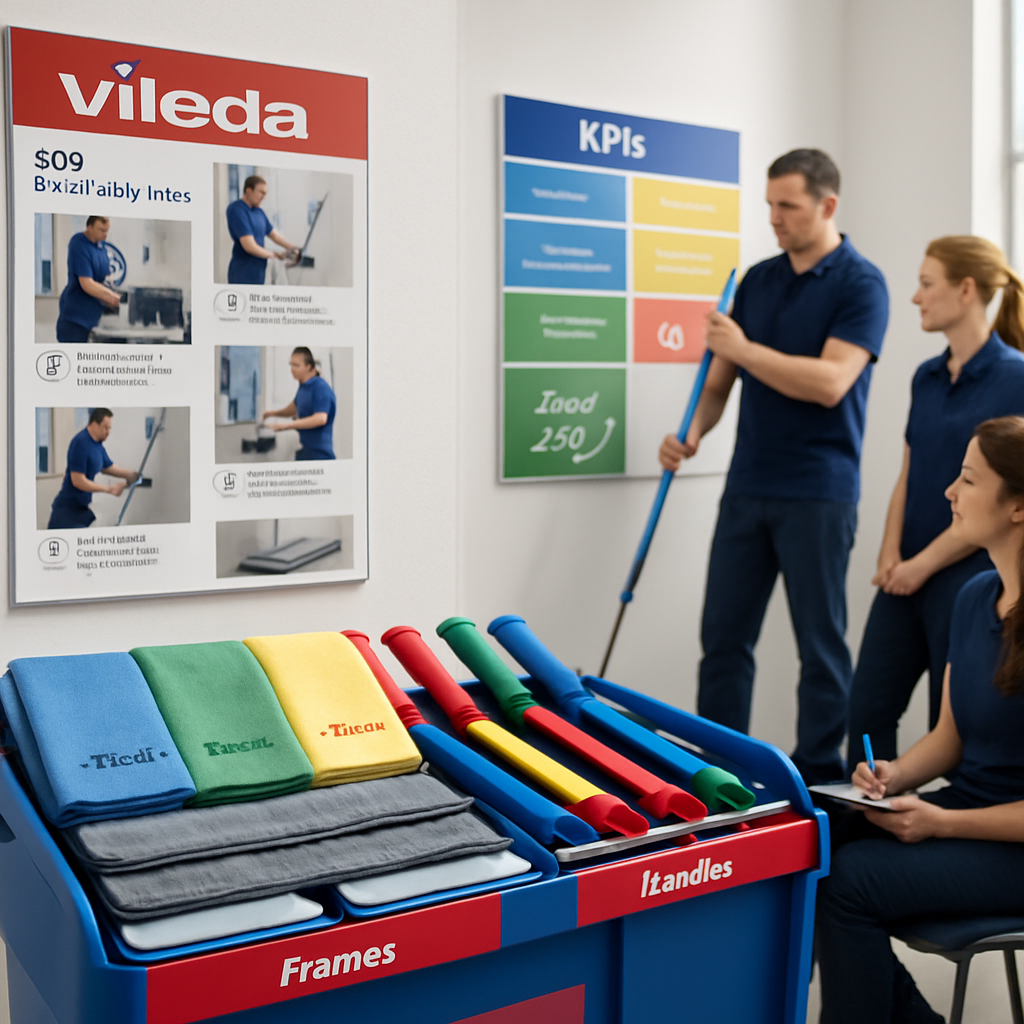
Standardizing Cleaning Across Multiple Sites
How to build a common toolkit, visual SOPs and coaching audits to unify cleaning across locations.
Ergonomics & Training: The Human Side of Cleaning Efficiency
How ergonomic equipment and practical training reduce injuries, boost consistency and raise cleaning efficiency.
Stay updated
Lorem ipsum dolor sit amet and select amet tempor venenatis tellus id.