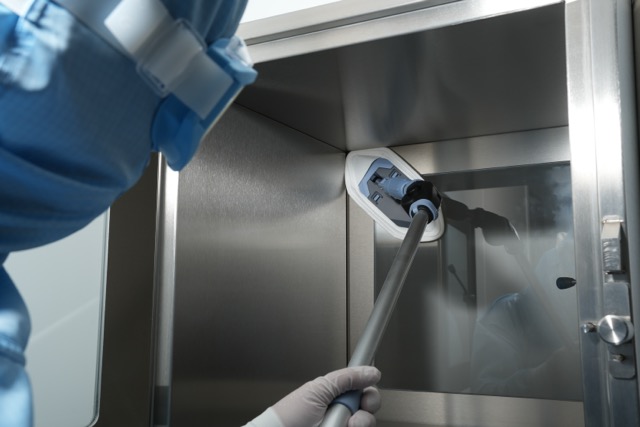
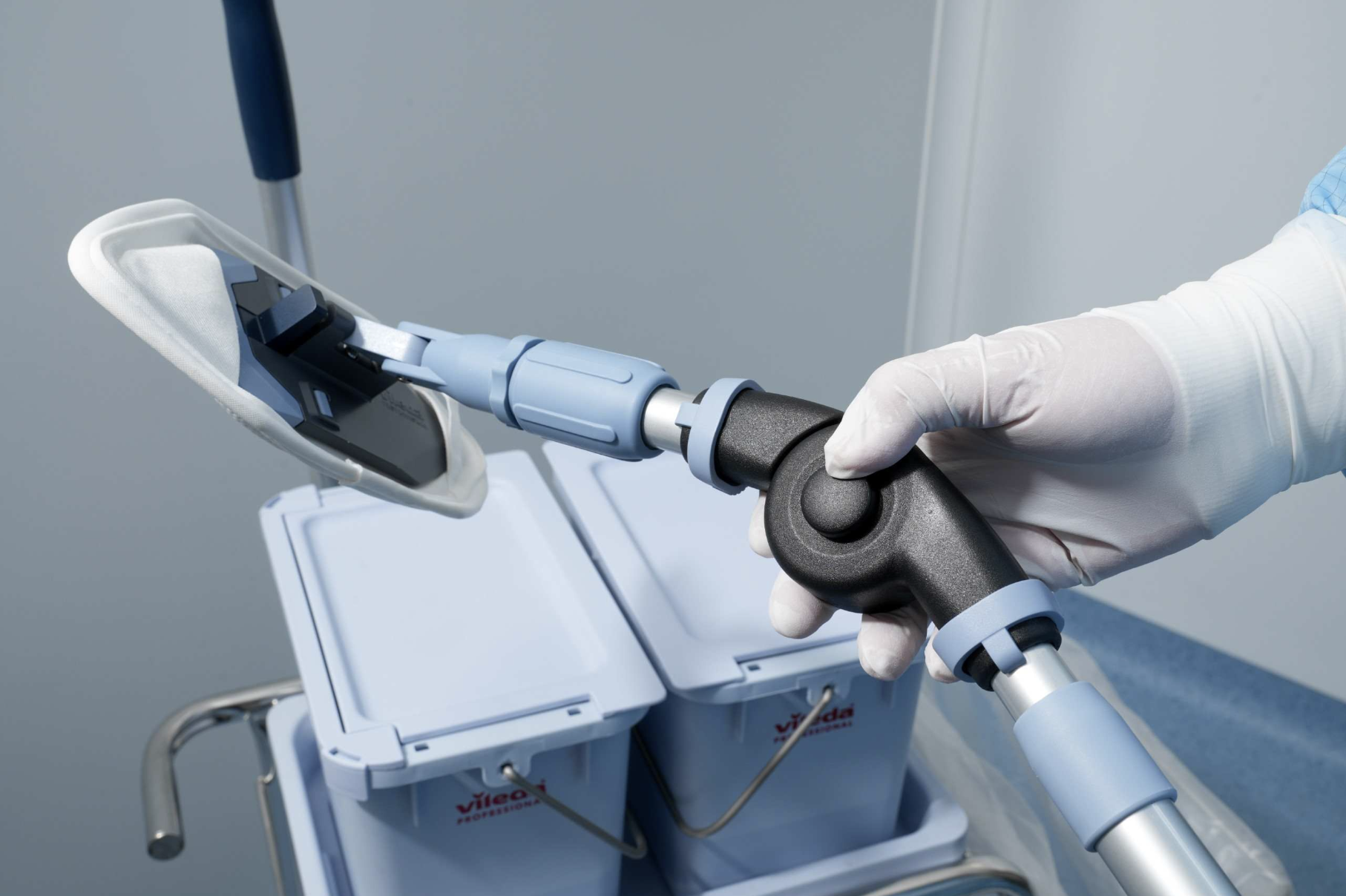
The Floor Problem Nobody Talks About
Walk into any pharmaceutical manufacturing facility, semiconductor fab, or medical device cleanroom, and you'll find exhaustive protocols governing airflow, gowning, equipment sterilisation, and personnel movement. The investment in contamination control at every level is significant, deliberate, and well-documented.
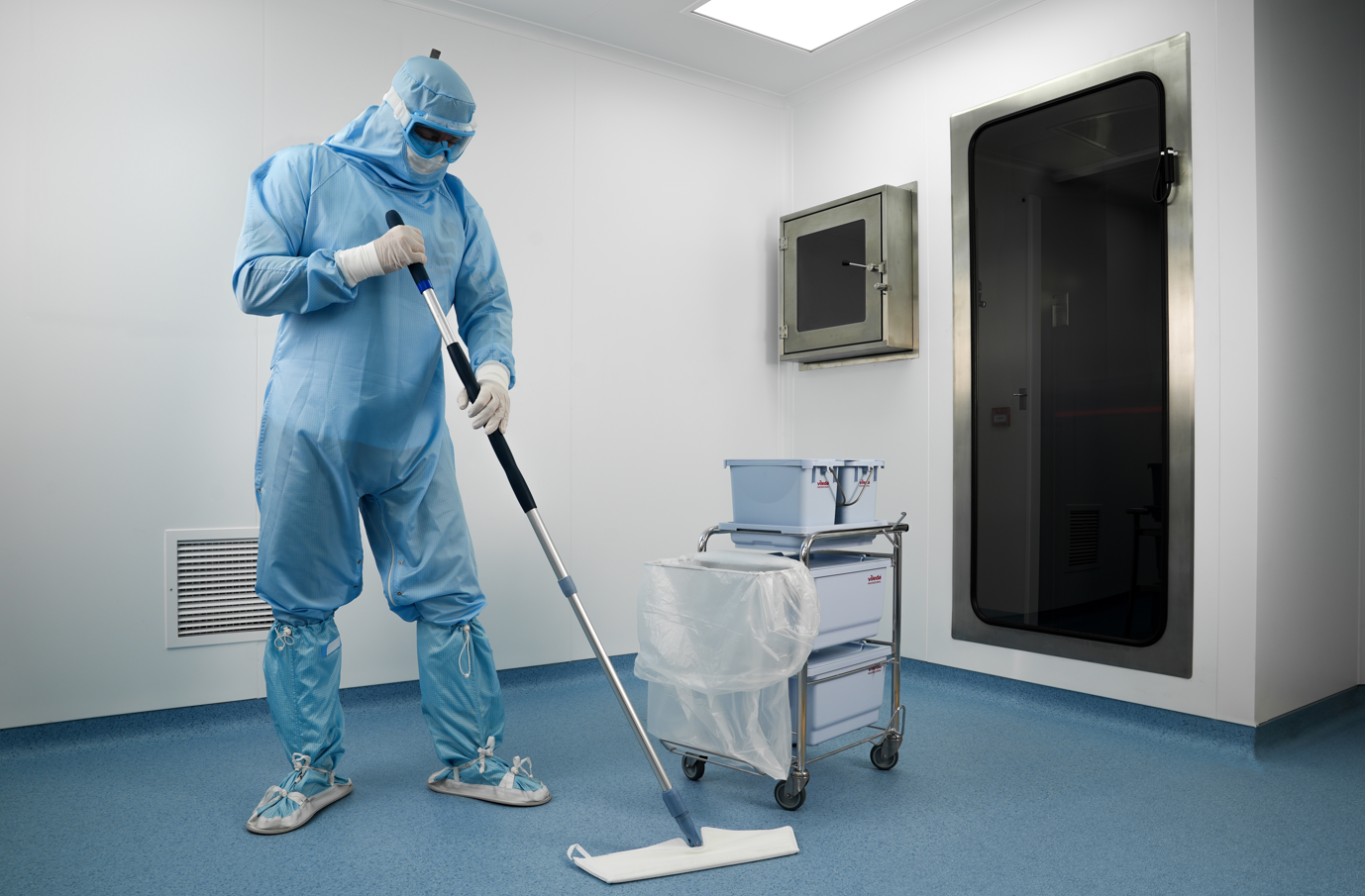
And then, in many of those same facilities, someone pushes a ‘conventional’ mop across a Grade B floor.
It sounds like a small thing. It isn't. Floors in controlled environments are among the highest-contact surfaces in the entire facility — subject to continuous foot traffic, equipment wheel movement, and the settling effect of air currents that deposit particulates from every direction. What happens at floor level doesn't stay at floor level.
The question isn't whether your floors need rigorous cleaning. It's whether your current system is actually capable of delivering it.
Why Traditional Systems Fail in Controlled Environments
Conventional mopping systems — 100% polyester, mono-material, string and dolly mops, janitorial bucket-and-press setups — were engineered for general-purpose cleaning. They were never designed to meet the demands of ISO 14644 or GMP Annex 1.
In a controlled environment context, their limitations aren't minor inefficiencies; they're active risks.
The Microfibre Difference: Engineering vs. Effort
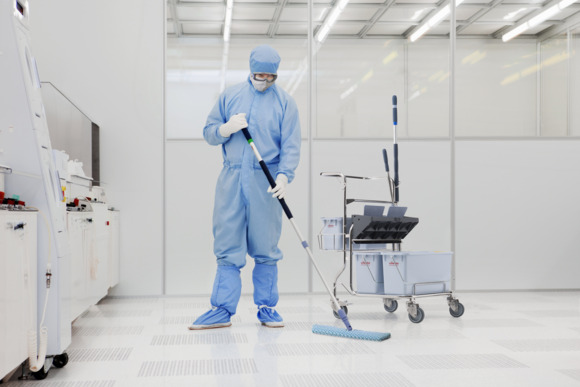
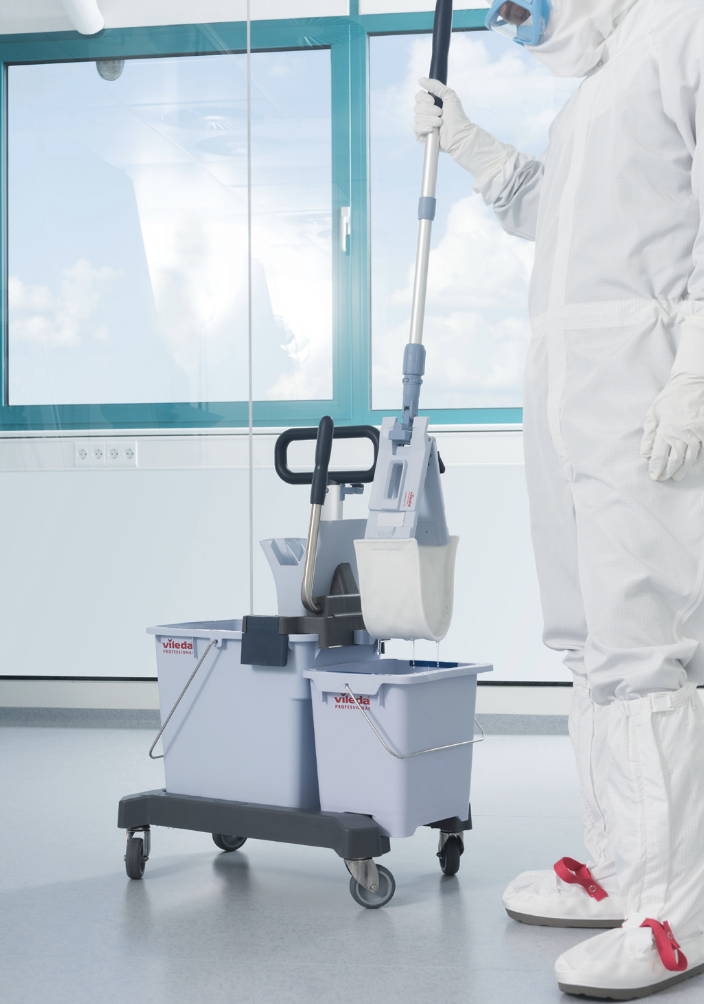
Single-use microfibre flat mopping systems represent a genuine engineering response to these challenges — not a marginal product improvement, but a different philosophy of contamination control.
The material science matters here. Microfibre's construction allows it to capture and physically hold fine particles, microorganisms, and chemical residues deep within the fibre structure — away from the surface and away from redeposition. Unlike conventional materials that push particulates across a surface, microfibre removes them. Its electrostatic properties attract particles that are invisible to the naked eye and that conventional materials simply pass over.
Combined with high absorbency — which ensures liquids and the particulates suspended within them are drawn into the mop rather than spread — the result is a cleaning action that is mechanically superior at every step of the process.
Critically, single-use deployment eliminates the contamination variables that laundering introduces. There are no laundry cycle inconsistencies, no fibre degradation over time, no residual detergent or disinfectant carried over from the previous use. Each mop head arrives validated, performs consistently, and is discarded — removing itself from the contamination chain entirely.
Compliance Is About Proof
In regulated environments, the distinction between "we clean" and "we can demonstrate compliant cleaning" is not a semantic one. It is the difference between a defensible audit position and an observation.
Single-use microfibre systems are designed with documentation and validation in mind. Their pre-validated status for use in cleanroom classifications simplifies SOP development. The consistency of single-use deployment — same product, same performance, every cycle — removes the variables that make validation a moving target when laundered systems are involved.
When your cleaning protocol is built on repeatable, validated mechanical action, your SOPs describe what actually happens on the floor. That's the foundation of credible, audit-ready documentation.
The question regulators are effectively asking is: can you prove that your cleaning did what you claim it did, every time? A single-use microfibre system is, by design, built to answer yes.
Implementation: What "Getting It Right" Actually Looks Like
Upgrading your floor protocol isn't simply a product swap. The full value of a single-use microfibre system is realised when implementation addresses three areas:
Material specification. Not all microfibre products are equivalent. For controlled environments, mops must be low-linting to prevent particle generation, chemically resistant to the disinfectants in your protocol, and pre-validated for your cleanroom classification.
Specifying correctly at this stage prevents qualification failures downstream.
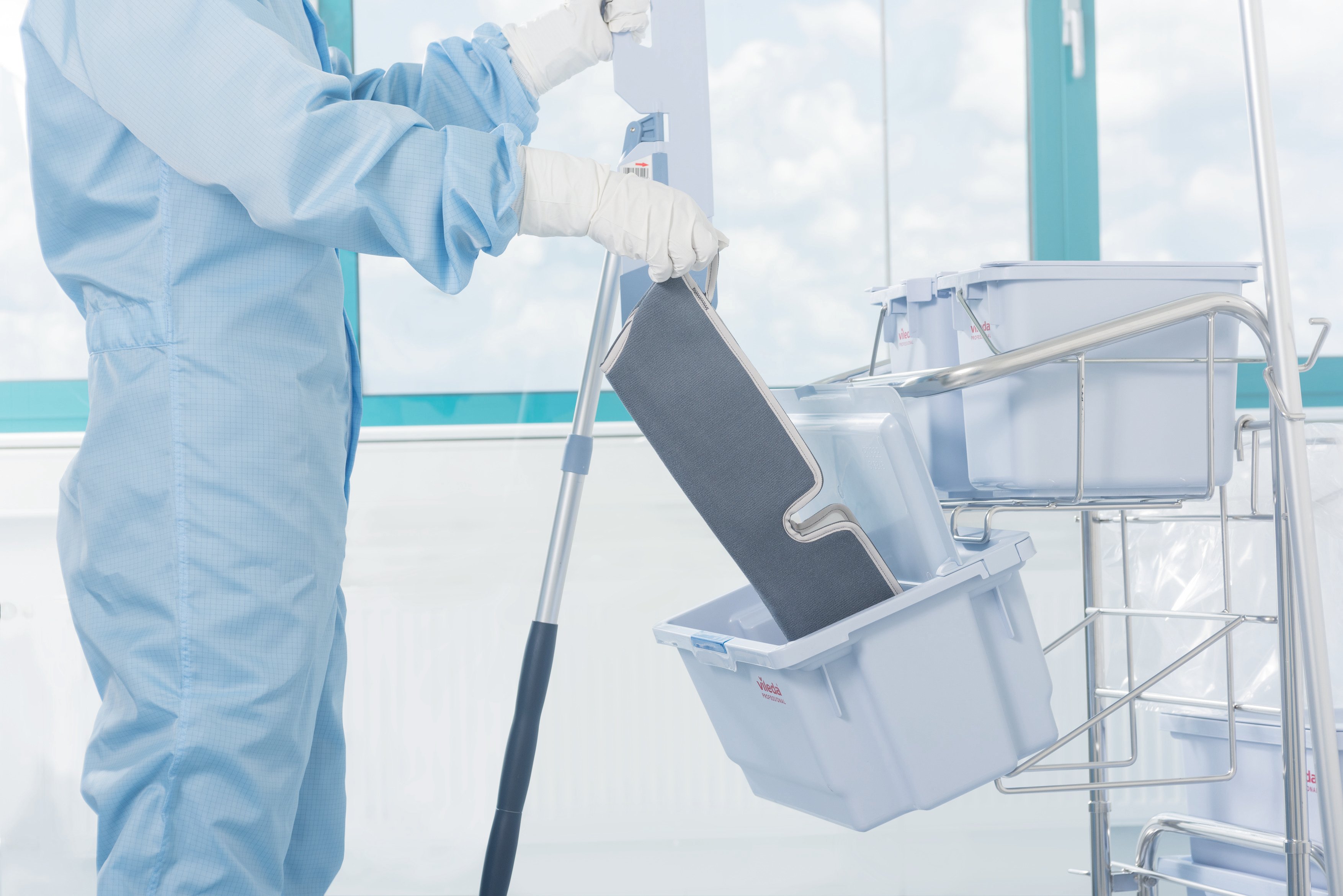
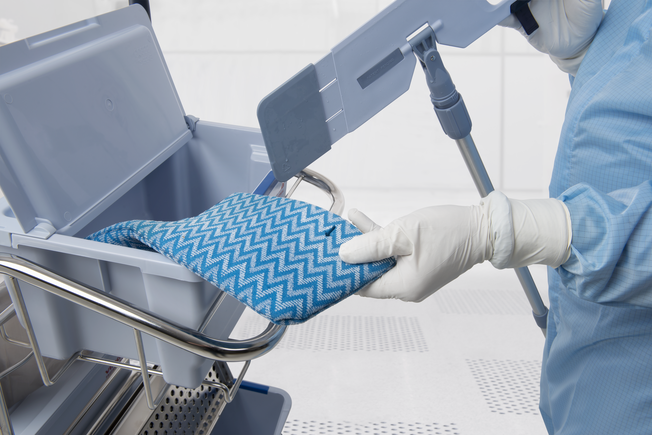
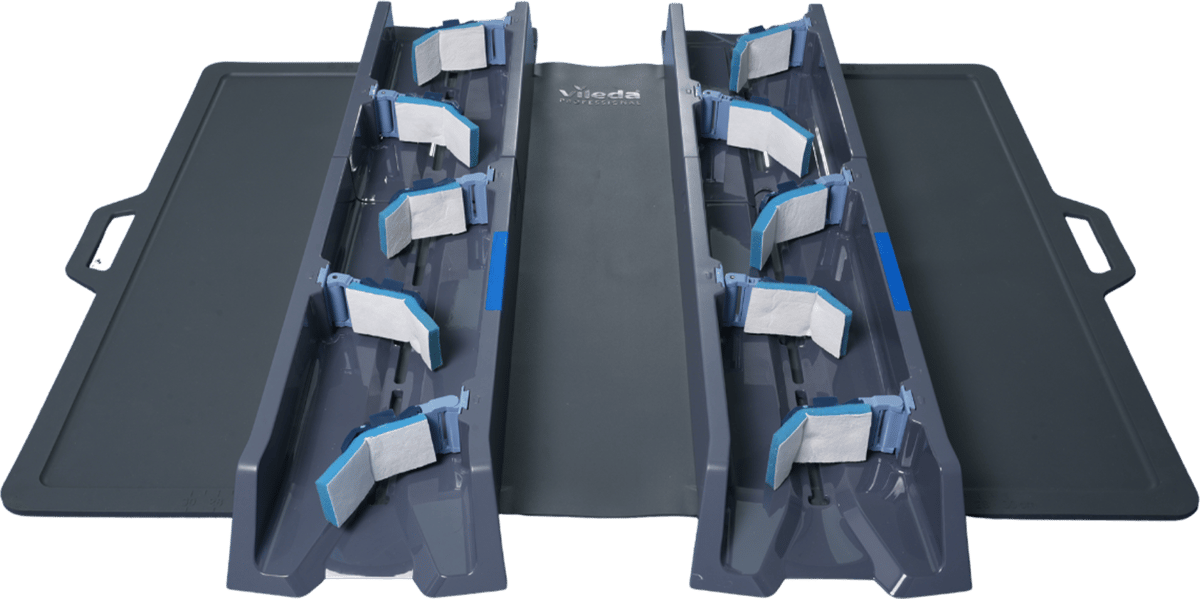
System design for operatives. Ergonomic handle systems and pre-prepared mop formats — where disinfectant is applied at the correct, validated concentration before the mop reaches the floor — reduce the dependence on individual operative technique. This is how you engineer consistency rather than training for it.
Training and validation. Even the best system performs only as well as its implementation. Operative training on single-use protocols, combined with particle count testing and microbial sampling before and after mopping, provides the validation data that turns a cleaning protocol into a compliance asset.
The Cost of Not Upgrading
One batch failure. One audit observation that triggers a remediation programme. One particulate excursion that shuts down a suite during a critical production window.
The economics of contamination in pharmaceutical and medical device manufacturing are unforgiving. The cost of a single significant contamination event — in lost product, regulatory consequence, and reputational damage — routinely exceeds the investment in an entire upgraded cleaning system many times over.
The floor protocol that felt like a low-priority line item looks very different in that context.
Cleanroom compliance is built on the principle that every variable you can engineer out of a process, you should. Airflow is controlled. Personnel access is governed. Equipment is validated.
Your floor cleaning protocol deserves the same rigour.
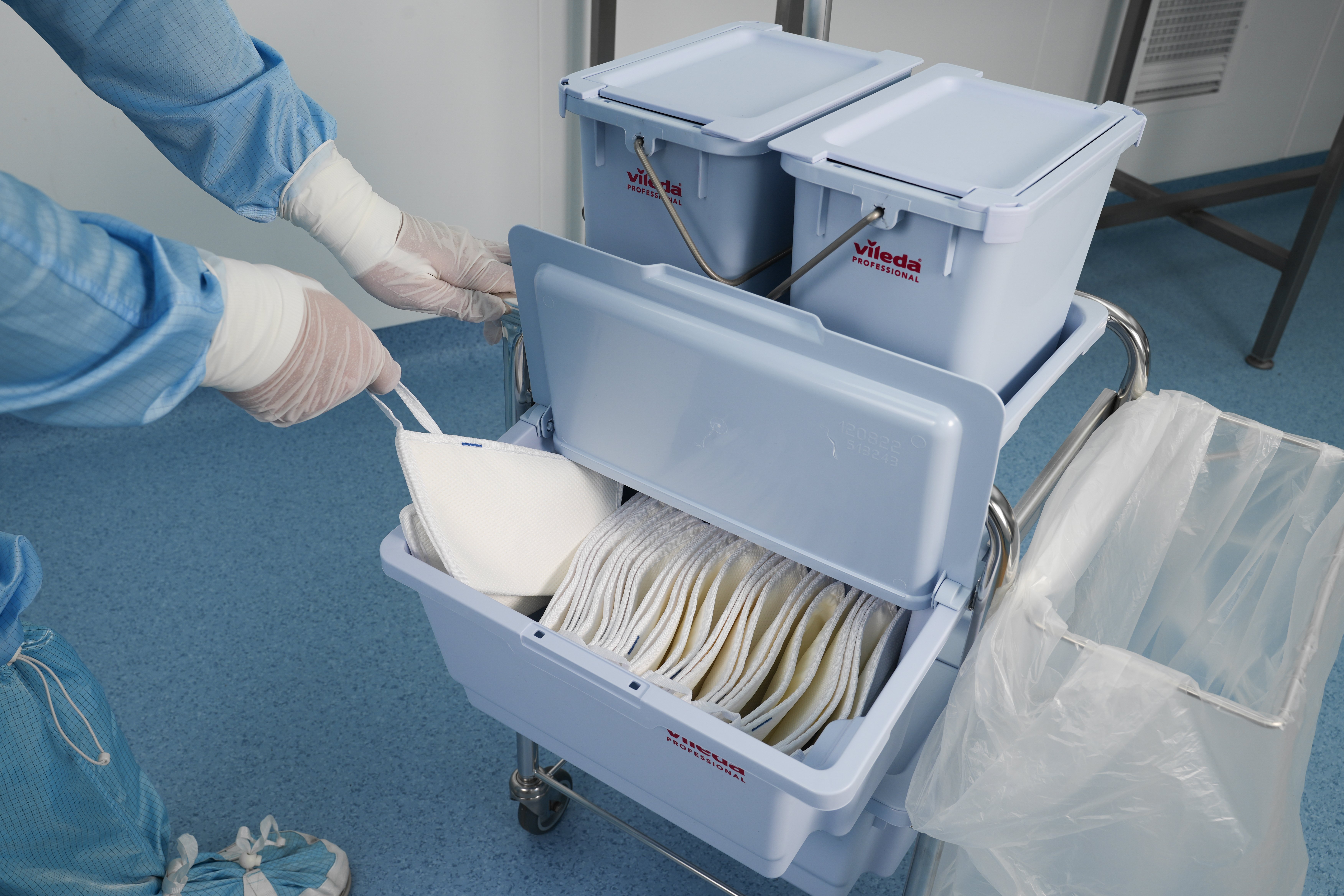
Single-use microfibre mopping systems aren't a premium option for facilities with budget to spare.
They are the appropriate engineering response to the contamination challenge that every controlled environment faces — one that delivers measurable outcomes in contamination control, operational efficiency, and audit-ready compliance.
The question isn't whether you can afford to upgrade.
It's whether you can afford not to.


 Article
.webp?width=580&height=435&name=CE-MultiSurface-Cleaner-Tool-Bend%20(1).webp)
 Linkedin
 X
X
 Facebook