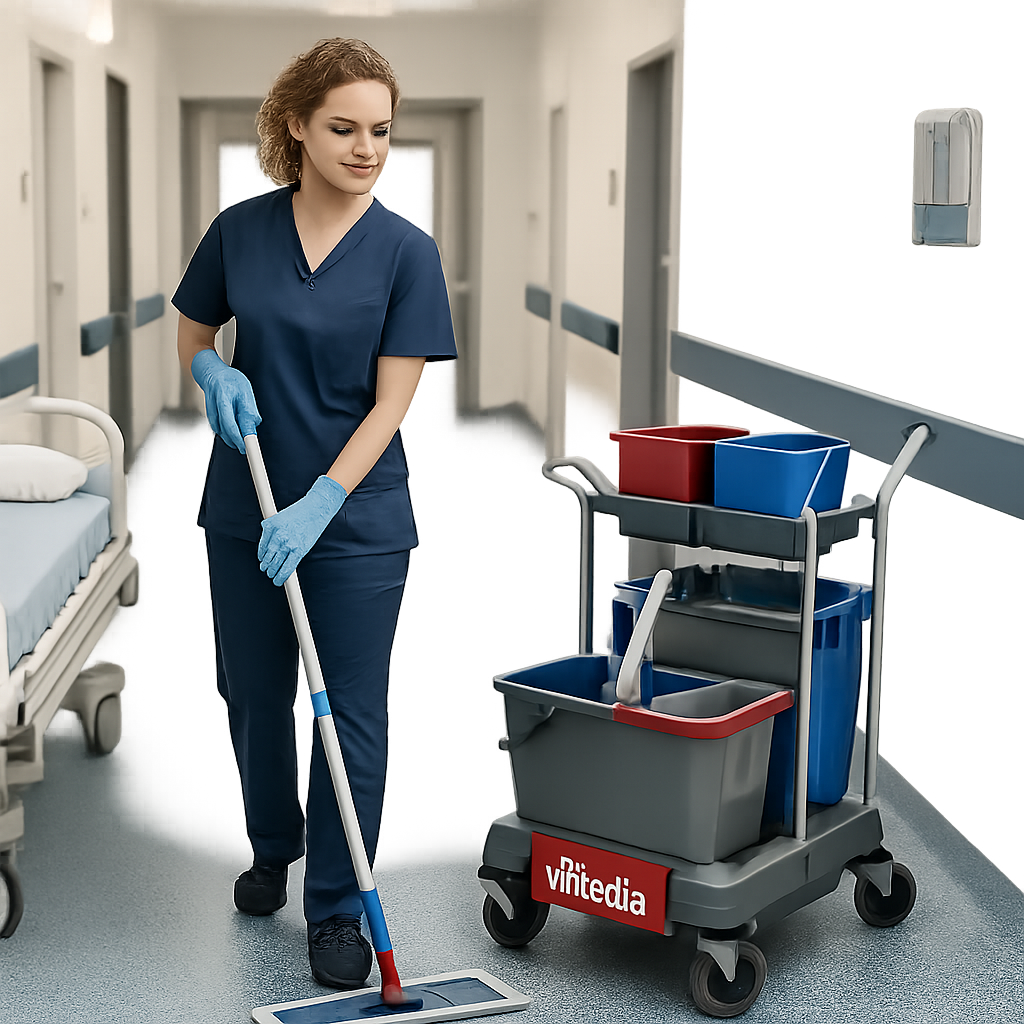
Efficiency in Everyday Facility Cleaning
General building cleaning spans offices, schools, airports, retail and public buildings. Each site has different traffic patterns, surface types and schedules, but clients expect the same result: consistently clean, safe spaces. This article presents a practical roadmap to increase cleaning productivity without compromising quality—ideal for multi-site providers and in-house facility teams.
Standardize to stabilize
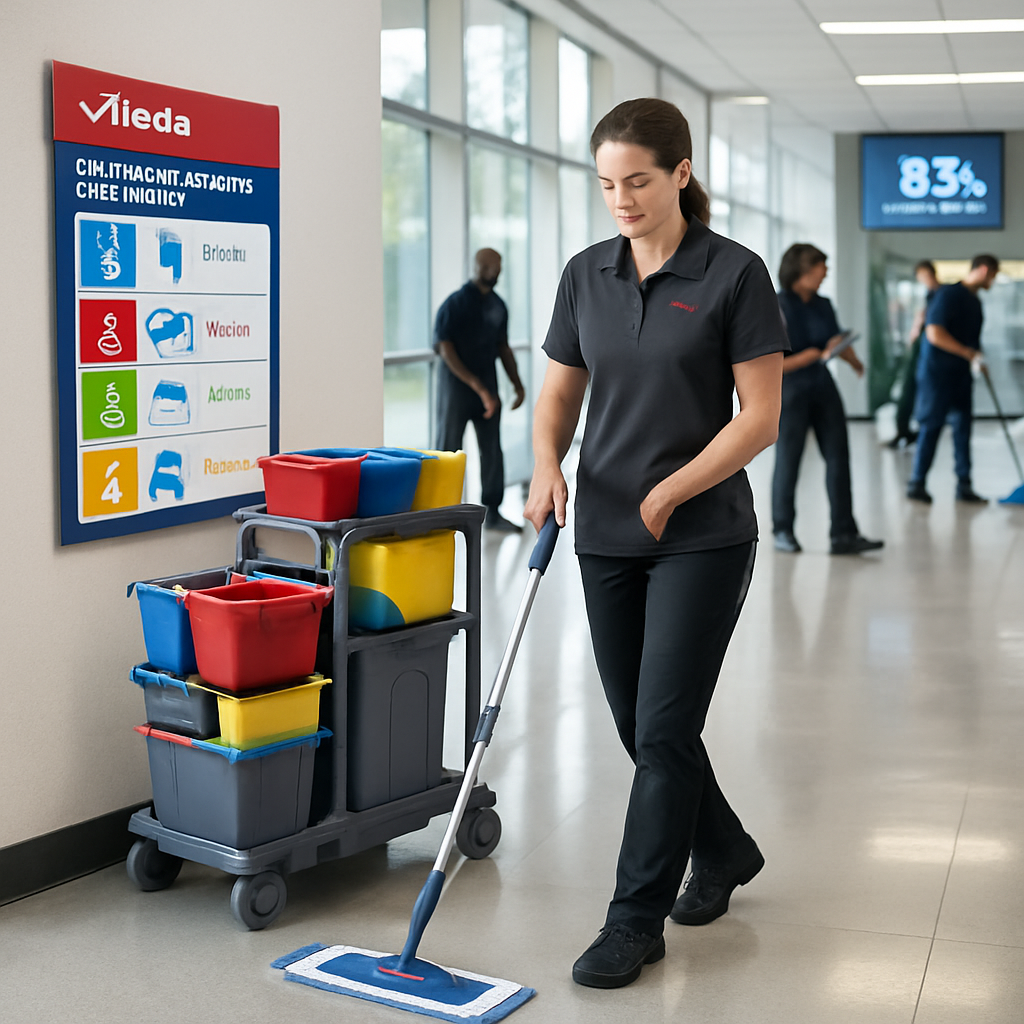
The biggest barrier to efficiency is process variability. When people improvise, results fluctuate and time per task expands. Start by cataloging the most common tasks: dusting, sanitizing touchpoints, restroom maintenance, hard-floor cleaning and waste handling. Define tool sets and sequences for each. Visual SOPs and trolley “blueprints” help technicians prep faster and reduce decision fatigue on the floor.
Tools that multiply effort
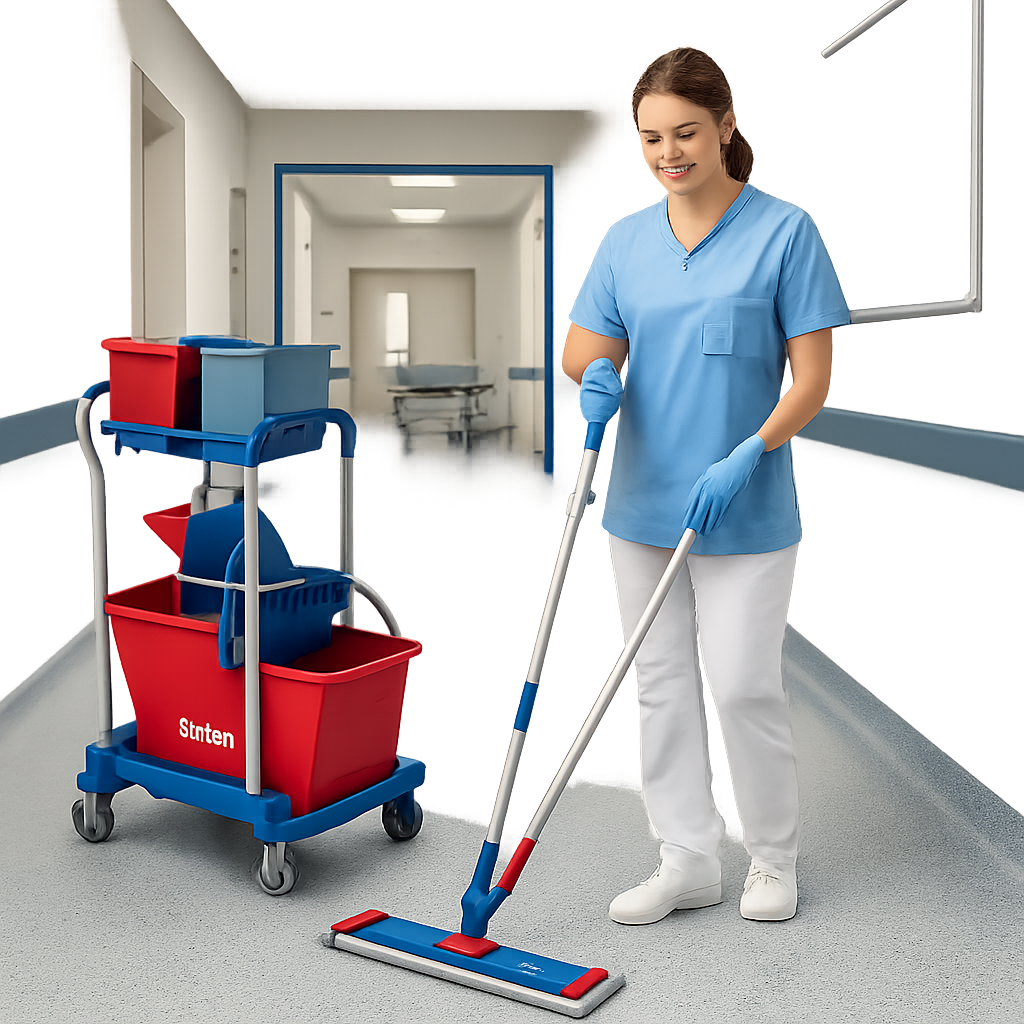
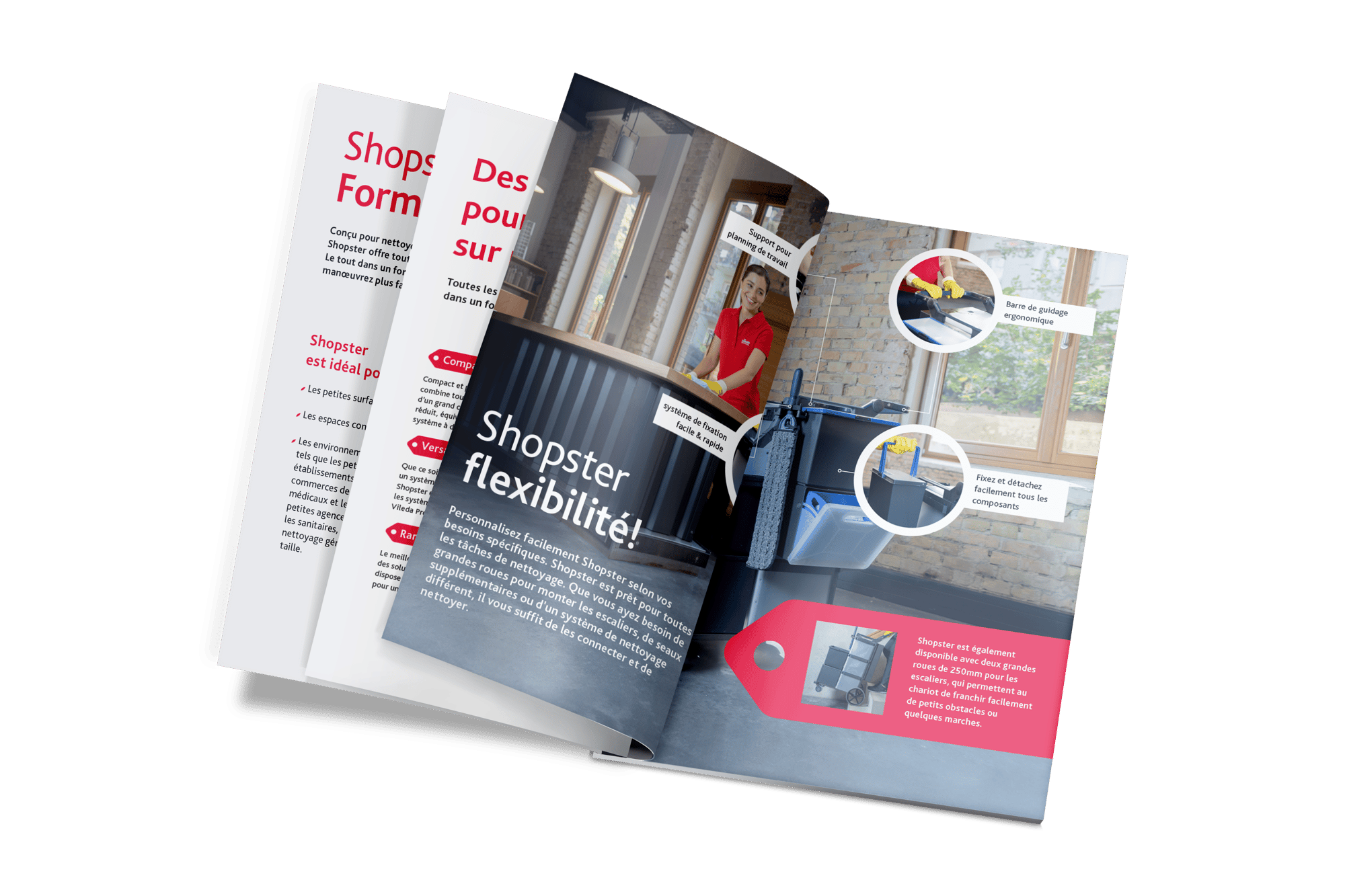
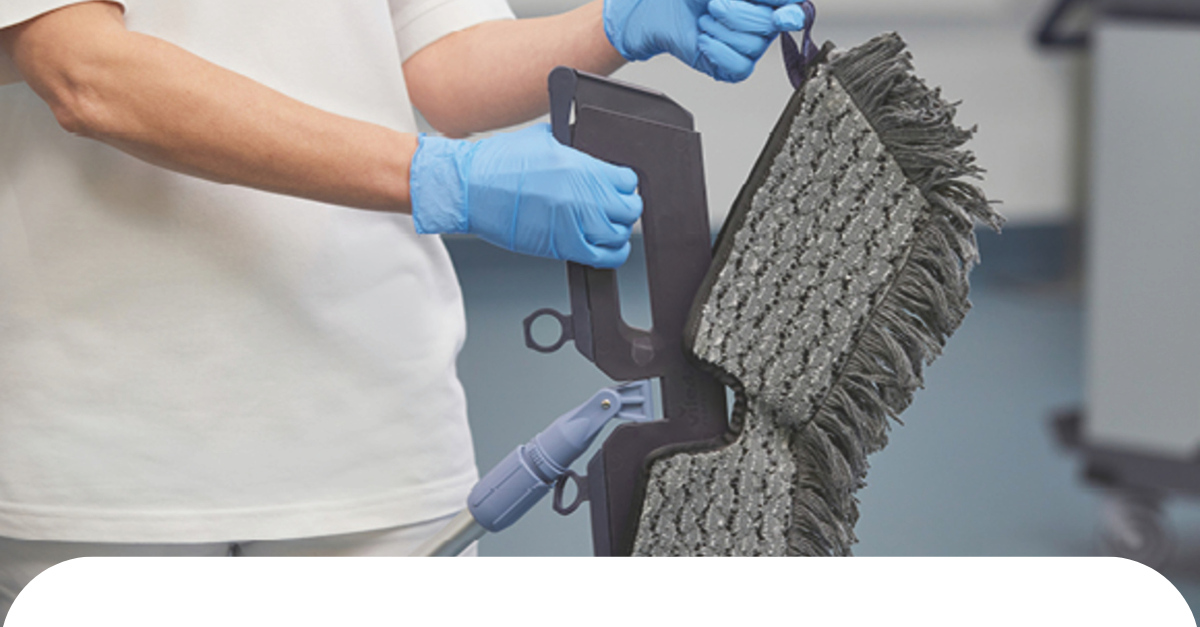
Microfiber cloths and flat mops remove soils with fewer passes. Pre-prepared systems eliminate bucket filling and emptying, saving minutes per room. Ergonomic poles with swivel heads allow under-desk and edge access without bending. On large floors, consider modular frames that cover more area per stroke while maintaining control. The goal is to convert human energy into visible results with minimal wasted motion.
Scheduling for flow
Align cleaning routes to traffic and building usage. Daytime cleaning in open offices may prioritize touchpoints and restrooms with quiet tools, while deeper cleaning occurs after hours. In schools, coordinate around class transitions. In airports, use micro-routes for restrooms and gates based on flight waves. A good schedule increases first-time-right outcomes and reduces rework.
Measure what matters
Track time per zone, tasks completed per shift, and rework incidents. Audit a small sample daily for visual standards and touchpoint coverage. If using IoT counters or smart dispensers, correlate usage spikes with staffing to fine-tune routes. Share results with teams so they see progress and understand how small improvements compound into major gains over weeks.
Safety and ergonomics
Musculoskeletal injuries are costly and demotivating. Equip teams with adjustable poles, lightweight frames and glide-friendly textiles. Train on neutral spine posture, two-hand turns and smart lifting. Healthy teams are productive teams.
Sustainability and cost
Efficient cleaning uses less water, chemistry and energy. Microfiber reduces chemical dependence while improving pickup; pre-prepared methods reduce wastewater. Durable gear lowers replacement costs. These savings protect margins and help meet sustainability commitments.
Takeaway: Standardize methods, equip for ergonomics, schedule for flow and measure relentlessly. That is the general building cleaning formula for reliable quality at scale.



 Linkedin
 X
X
 Facebook

 Blog
Blog