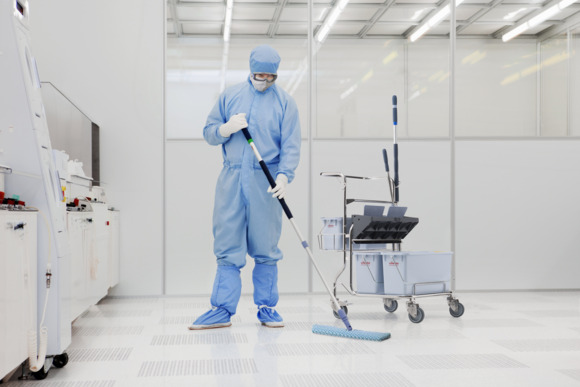
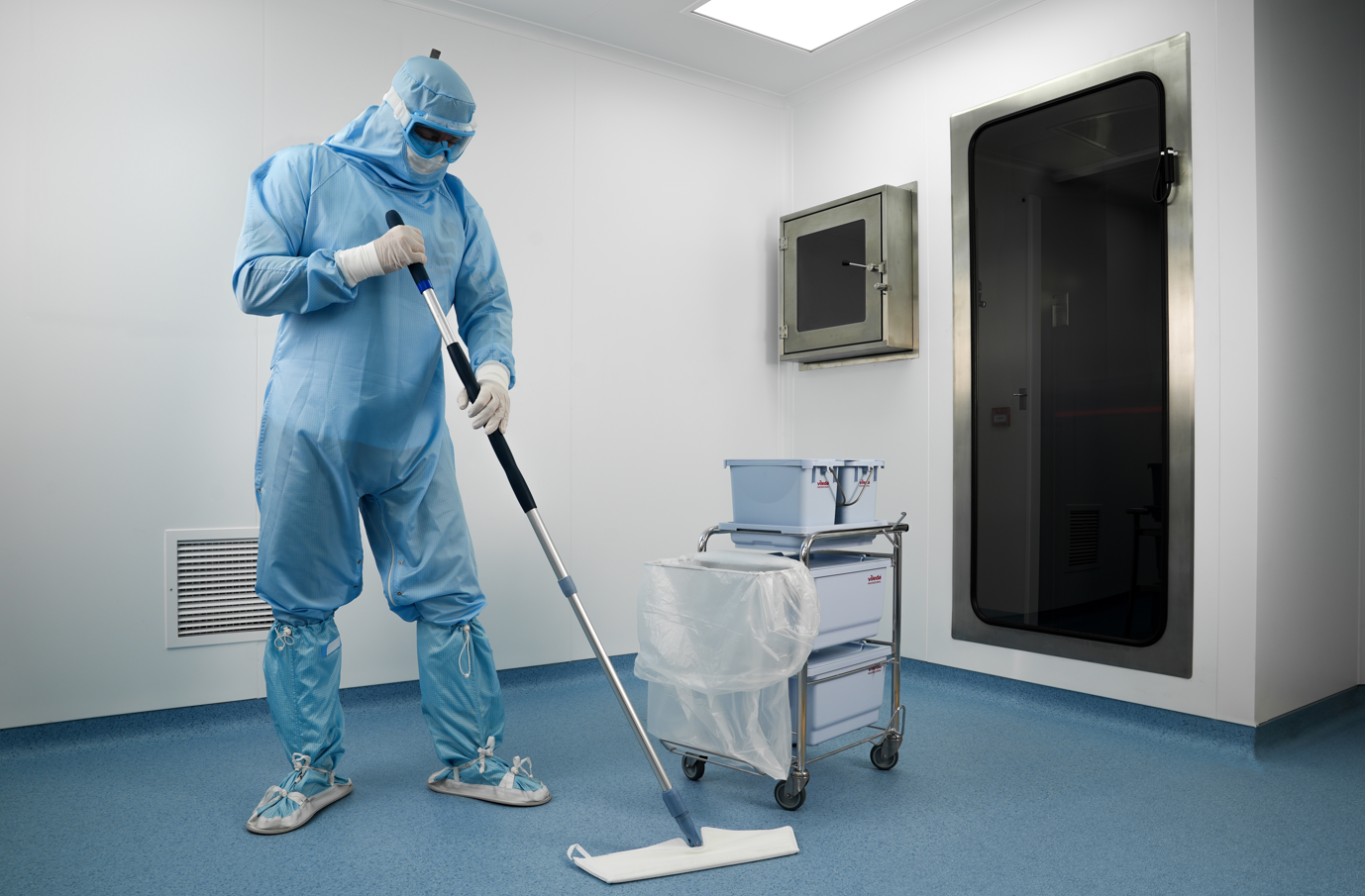
Cleaning inside Biosafety Cabinets (BSCs), isolators, and RABS is often underestimated because the surfaces appear simple to access and maintain. In reality, the main challenge is not just reaching the surfaces, but doing so without compromising airflow, operator safety, or GMP compliance.
In these environments, cleaning is not a visual task. It is a controlled process defined by access restrictions, validated tools, and repeatable technique.
Controlled Access Is Not Optional
Operators are strictly prohibited from inserting the head or shoulders into RABS, isolators, or biosafety cabinets during cleaning or operation. This is a fundamental requirement in GMP environments, not just a procedural preference.
From a contamination control perspective, this is essential to avoid:
- Introduction of viable and non-viable particles from the operator
- Disruption of unidirectional (laminar) airflow
- Loss of Grade A / ISO Class 5 integrity
The Real Risk in Manual Cleaning
Manual wiping inside these systems introduces variability that is often not visible during execution. The risks include:
- Incomplete surface coverage due to limited reach
- Disturbance of airflow patterns during cleaning
- Particle shedding from operator proximity
- Delayed detection of issues through EM excursions or audit findings
In most cases, contamination events are not immediately visible. They only become apparent through environmental monitoring or quality deviations later in the process.
Why Dedicated Cleaning Tools Matter
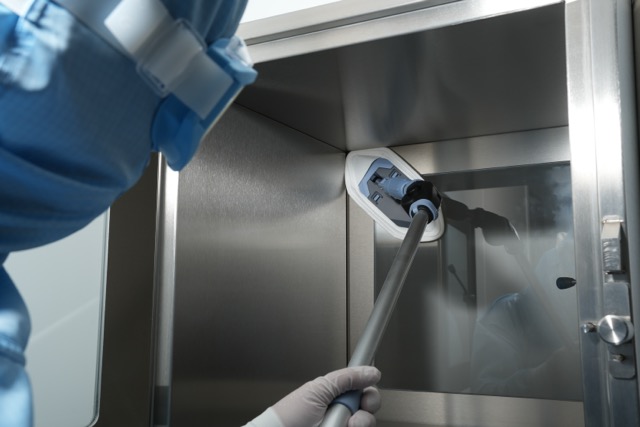
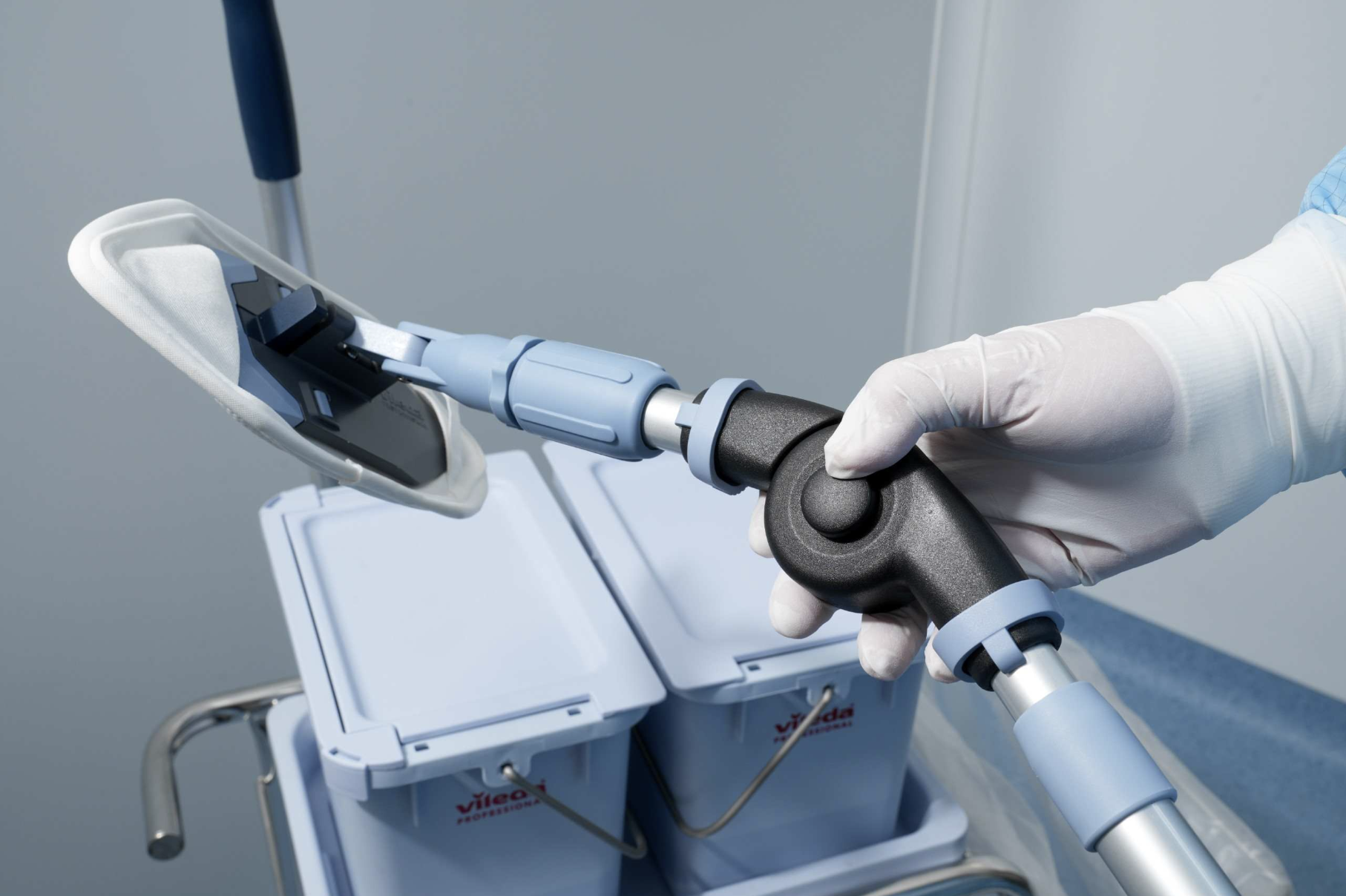
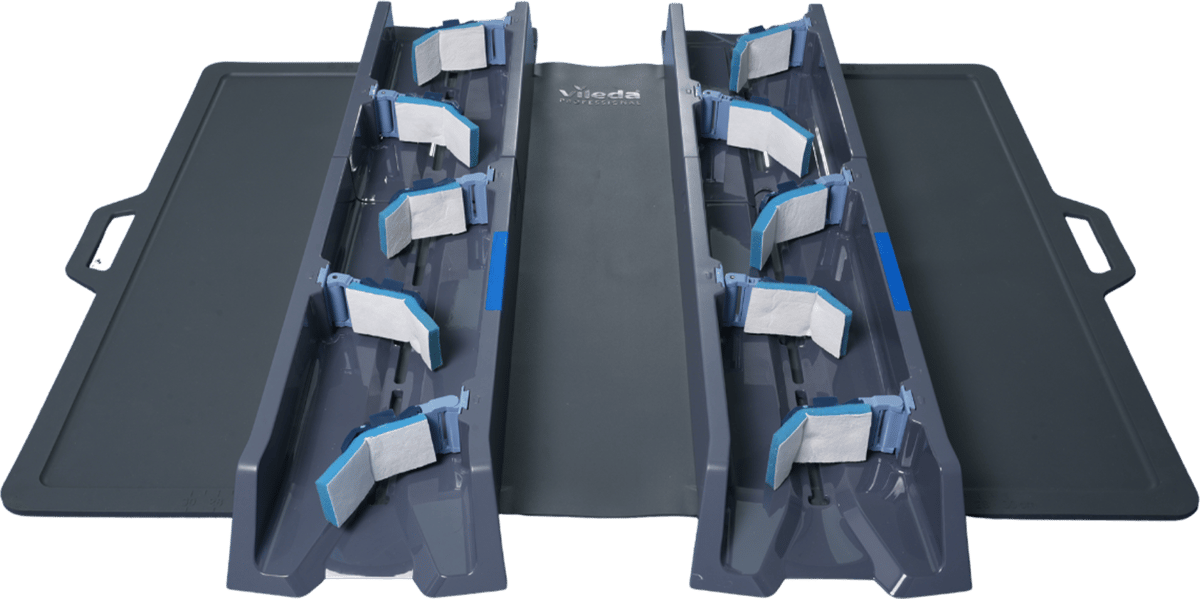
Tools such as the Isolator Cleaning Hardware (182622) combined with the White Cleaning Pad (182724) are designed specifically to address these limitations.
They allow:
- Extended reach into critical zones without upper-body intrusion
- More consistent contact pressure across surfaces
- Improved coverage of overhead, side, and rear internal panels
- Reduced operator dependency in technique execution
This shifts cleaning from a manual, variable activity to a more controlled and repeatable process.
Vileda Professional CE isoXclean System
The CE isoXclean system is designed for controlled cleaning of isolators, BSCs, and RABS, particularly in GMP environments where reproducibility is critical.
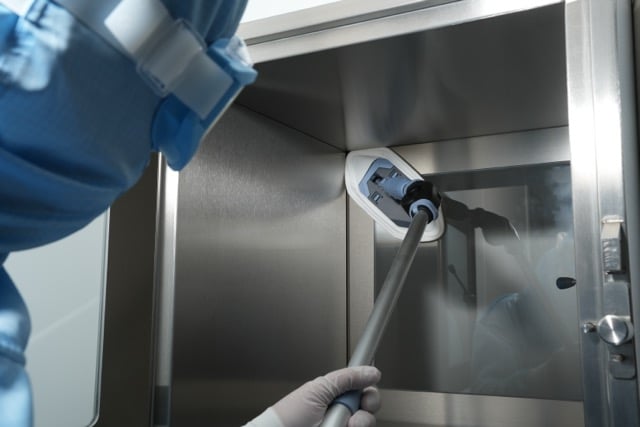
Key technical characteristics include:
- Designed for hard-to-reach internal surfaces
- Supports consistent cleaning across complex geometries
- Compatible with validated disinfectant regimes
- Reduces variability in operator technique
Validation and Performance Overview
The system is supported by multiple validation and third-party test results, including:
- Up to 8 m² cleaning area per pad
- Up to 80 autoclave cycles for hardware durability
- Resistance to commonly used disinfectants
- Up to 99.99% cleaning efficiency (third-party tested)
- Passed LPC (Liquid Particle Count) testing
- Passed APC (Airborne Particle Count) testing
- Availability of sterile-grade variants
Closing Thought
In controlled environments, “clean” is not defined by appearance. It is defined by whether the process can consistently achieve validated, repeatable results under strict operator constraints.
This is where tooling, training, and technique come together and where small improvements in method can have a significant impact on compliance and risk control.
If anyone is working through challenges in isolator or cleanroom cleaning setup, feel free to reach out.


 Article
.webp?width=580&height=435&name=CE-MultiSurface-Cleaner-Tool-Bend%20(1).webp)

 Linkedin