
 Article
Most cleaning teams stop their glove decision at material. Nitrile for resistance and durability, latex for comfort and tactile precision — pick one, and the same pair gets used for every job that follows: mopping a corridor, handling a degreaser, wiping a food-prep counter. Same glove, different risk, every time.
Material is the right starting point. It's just not the finish line. The task itself, and the specific chemical or hazard it carries, deserves the same level of attention as the nitrile-versus-latex choice — and that's the part most glove programs skip.
It feels safe to assume more gloves means more protection. But matching the right glove to the right task is what actually keeps hands protected, and it starts with understanding what “certified” really covers.
What the classification actually protects against
Employers are required to match protective equipment to a documented risk assessment — not just supply gloves and call it done (Legislative Decree 81/2008). The three PPE risk categories capture why this matters:
- Category I — minimal risk, such as lightweight gloves for non-hazardous dirt.
- Category II — intermediate risk, including most cleaning PPE such as chemical gloves, non-slip footwear, and safety glasses. These require CE marking, notified-body assessment, and selection based on the chemicals used.
- Category III — risks of death or irreversible harm, such as respiratory protection for high-concentration disinfectants or confined spaces, with stricter supply, training, and maintenance requirements.
The detail that matters most for gloves specifically: classification depends on resistance to permeation, penetration, and degradation from particular chemicals. A glove that resists acids may offer no protection at all against solvents — and the wearer may not find out until skin absorption has already happened. Matching device to chemical means checking the safety data sheet of the product in use against the glove's tested performance, not assuming any certified glove will do.
The Vileda Professional range, task by task
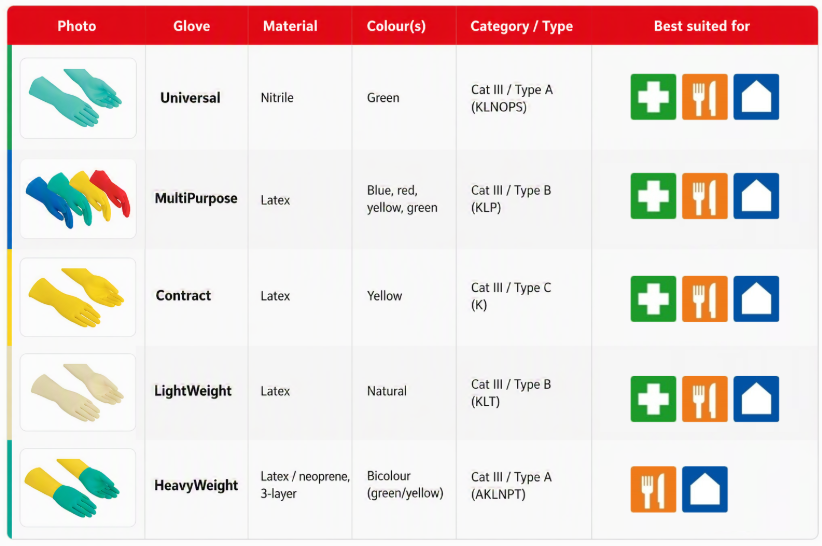
That logic is exactly what the five gloves in the Vileda Professional line are built around:
- Universal (nitrile) — built for the heaviest chemical exposure: oils, solvents, and strong detergents, without the allergy risk of latex.
- MultiPurpose (latex, four colours) — the everyday choice for complete cleaning tasks, balancing grip, comfort, and chemical resistance.
- Contract (latex) — the entry-level option for lower-risk, general cleaning where cost efficiency matters most.
- LightWeight (latex) — trades mechanical bulk for dexterity and tactile sensitivity, for tasks where feel matters more than force.
- HeavyWeight (latex/neoprene, three-layer) — the strongest combined chemical and mechanical resistance in the range, for the most demanding jobs.
Each is CE Category III certified, and each sits at a different point on the same trade-off: resistance versus dexterity, durability versus comfort. Choosing between them is the practical version of the task-matching argument above — not a downgrade from “the safe glove,” just the right one for the job in front of you.
Gloves wear out, too. Bulging, hardening, or cracking are signs of degradation, and a replacement cycle based on chemical exposure and manufacturer guidance is a basic safety practice, not an optional extra. This is also why construction matters: the cotton flock lining in MultiPurpose and Contract, and the three-layer build in HeavyWeight, aren't just comfort features — they're what keeps a glove worn correctly for a full shift instead of removed early.


Mechanical risk, chemical resistance, and microorganism protection pictograms — as shown on Vileda Professional glove packaging.
Why this connects to plastic waste, not just PPE compliance
Cleaning isn't the only sector rethinking glove use. Healthcare workers wear gloves inappropriately in up to half of clinical encounters — worn when not needed, kept on too long, or not changed between tasks. Non-sterile exam gloves are among the highest-volume single-use plastic products purchased by health systems: in the US alone, 100–124 billion are used annually, representing 350,000–434,000 tons of medical plastic waste, and accounting for roughly 45% of the carbon footprint of personal protective equipment. (Antimicrobial Stewardship & Healthcare Epidemiology, 2026)
Hospitals that moved from blanket glove policies to task-matched ones saw the reduction follow naturally, without compromising safety. One UK pediatric hospital cut glove use by a third through staff education alone, saving £90,000 and 18 metric tons of waste a year, with no increase in infections. A US outpatient clinic cut glove use per visit by 27%, saving roughly 1,500 kg of CO2-equivalent emissions annually.
The parallel for professional cleaning isn't that the same numbers apply — they don't, and the settings differ. It's that the underlying mechanism is the same: when the glove is matched to the actual task risk rather than used as a default, waste and cost fall together with no safety trade-off. For a cleaning operation, unnecessary use of heavier, more resource-intensive gloves on low-risk tasks carries the same avoidable cost, multiplied across every shift, every site, every year.
Building this into a task-matched glove program
- Classify tasks by exposure, not department: wet chemical contact, dry handling, or light-duty wiping each carry a different risk profile.
- Match glove to the specific chemical, using the product's safety data sheet — not the general category of “cleaning task.”
- Set a replacement cycle based on visible wear, chemical exposure, and manufacturer guidance, rather than replacing on habit or running gloves until they fail.
- Weigh comfort alongside protection level. Multi-layer construction and cotton flocking aren't just comfort features — they're what keeps a glove worn correctly for a full shift instead of removed early.
- Train on selection and correct donning/removal, not only on supply — this is a legal obligation, not a courtesy (Legislative Decree 81/2008).
The takeaway
More gloves isn't more protection, and one glove for every task isn't a strategy — it's a habit. The evidence, from both PPE regulation and healthcare's own glove-reduction research, points the same direction: match the glove to the task, the chemical, and its condition, and safety, cost, and waste all improve together. Worth a short internal audit: which of your tasks are matched to a specific tested chemical resistance, and which are running on “whatever's on the trolley.”
Sources:
- “PPE classification for cleaning tasks” — eduu.it training blog.
- Lalakea ML, Sheth R, Cerceo E, et al. “Using gloves wisely: rethinking glove use for health, safety, and environmental sustainability.” Antimicrobial Stewardship & Healthcare Epidemiology 2026;6:e88 (Cambridge University Press).
- Legislative Decree 81/2008 (Italy) and EU Regulation 2016/425 on PPE categories.
- Vileda Professional glove range brochure (product specifications and photography).
Featured vileda professional products
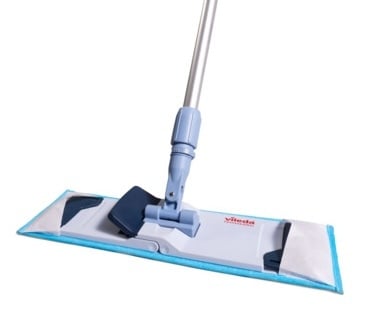
r-MicroOne Premium CombiSpeed Pro
A pocket mop consists of a high quality microfibre pad which allows an effective, hygienic cleaning and up to 99.99% virus and bacteria removal.
View Details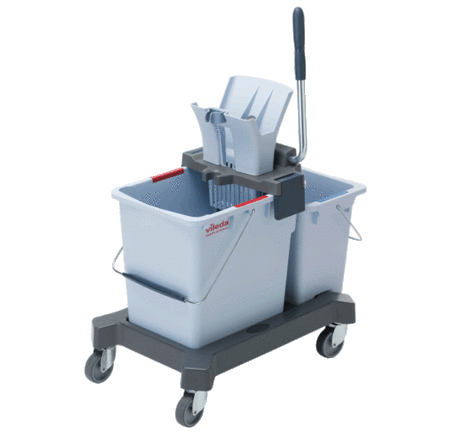
UltraSpeed Pro Double Bucket Range
Developed for all large area general floor cleaning tasks. Features a simple to use press, integrated handle holders and an innovative double bucket chassis.
View Details.jpg?width=800&height=534&name=r-Trio_Max_Mop_UltraSpeed_Pro_Frame_Telescopic_Handle_mopping_floor_in_use%20(1).jpg)
UltraSpeed Pro
Specially designed to minimise training efforts whilst maximising cleaning speed, versatility and ergonomics resulting in lower overall costs.
Featured product
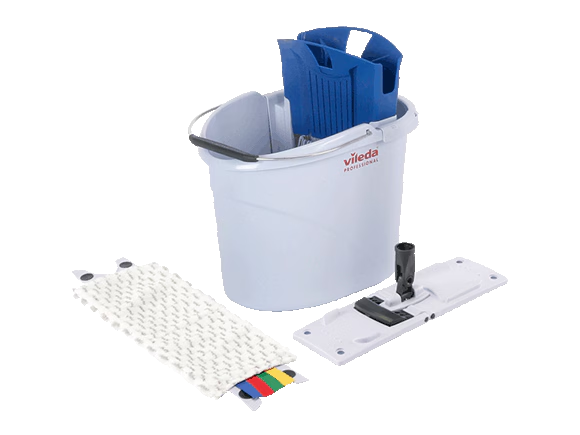
UltraSpeed Mini Starter Kit
Small and compact system with 10 L bucket and bionic press wringer.
 Linkedin
Read more
.jpg)
3 Mistakes Sabotaging Your Facility’s Cleaning ROI
Choosing the right cleaning setup matters. Learn the three key mistakes to avoid for efficient, safe, and professional ...
What managing 100,000 m² teaches you about operational standards
When you're responsible for 100,000 m² of academic space, 2,500 students, 600 staff, every single day, there's no room ...
What is a Cleaning System and Why Should You Care?
Learn what a cleaning system is and why it matters for productivity, hygiene standards, and professional cleaning ...
Stay Ahead in Professional Cleaning
Get practical insights, industry trends, and proven solutions delivered to your inbox.